Showing posts with label facts. Show all posts

Thursday, May 31, 2012

Rock Review: Flourite

Flourite is named for the Latin "fluo"-- to flow,  because it is used as an additive to aid in proper flow for iron smelting. Additionally, the phenomenon "flourescence" takes it's name from this stone where strong flourescence can commonly be observed under UV light.
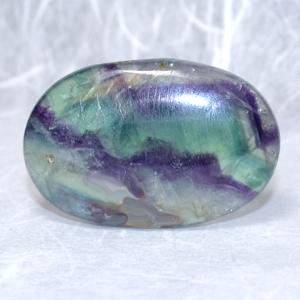
Excellent Specimens of flourite have beautiful, intense color banding in all shades of purple, mint green to teal, some pink and white. Strong color banding is a good way to identify flourite, but not all material is so fantastically banded. See below:
This is more common.

Flourite is found commonly cut into beads, and for other ornamental purposes. It can be found cut as a gemstone for setting in jewelry, but it is a relatively soft stone, making this practice uncommon.

This gem does have a common place in gemstone healing, however. It is thought to strengthen one's power of concentration. It is also used to cleanse the aura, and it is applied directly to an ailing part of the body to relieve pain.

Different colors of flourite are thought to have more specific benefits, more information on this here: http://www.charmsoflight.com/fluorite-healing-properties.html

Monday, May 7, 2012

Diamonds Part 4: CUT


The standardized grading of diamonds is a relatively recent industry development. Even after GIA established color and clarity grades, there continued to be a missing factor in a set of scientifically gathered information to accurately asses a diamond for quality. The final factor, thr fourth “C” stands for cut.

Color and clarity are inherent properties of the diamond as it comes out of the earth, yet the cut of the diamond is man's effort to unlock the shimmering beauty of the stone. Because diamonds are the hardest substance on earth, cutting a diamond in just the right was to create maximum brightness and fire is no small feat.

After my trip to GIA at the end of April, I have a profoundly new appreciation for the impact that a cutter can have on the overall look of a finished diamond. I analyzed some diamonds with excellent clarity and color grades that simply did not seem to sparkle. One in particular just looked dark and lifeless.

When I began to measure the proportions of the stone's depth as well as the angle and size of the facets, I discovered that while the gem looked similar to the other diamonds, it's proportions fell far outside of the prescribed ranges for excellent cutting. So even though this diamond was worth a great deal of money as rough material, the work of the cutter was of poor quality and really damaged the potential value of the stone. It would be very difficult to sell a diamond that just didn't seem to sparkle like the others.

On the other extreme, a diamond which is cut to fall within the many proportion standards for an excellent cut grade looks like it is radiating with it's own light source! The cut grade and proportions are based on the physics of light entering the diamond, then bouncing around at just the right angles to come back out the top of the stone for your viewing pleasure. The more the light bounces around inside the stone, the more it “disperses” or separates into different colors of the light spectrum creating what is termed “fire” or the presence of different colors of light.


Thursday, April 19, 2012

Diamonds Part 3: Clarity

As I gear up for a trip to a diamond grading lab class at the Gemological Institute of America, it seems like the perfect time to be doing a marathon rock review on diamonds. What makes these tiny rocks worth thousands, even millions of dollars to us? Is it all part of an incredible marketing plan by giant corporations with diamond interests? Perhaps there really is something to it.

The diamond is a gem fascinating from all perspectives. To begin with, a diamond is composed entirely from carbon, the building block of life. It is the only gem whose chemical makeup is so pure. That is precisely why the clarity of a given gem has a monumental effect on the value of that gem. Clarity characteristics represent something that got stuck in the crystal as it was being formed. Some clarity characteristics are tiny crystals of other types of gem, some are graphite, and yet others are simply cracks in the crystal structure. Regardless, they take away from the notion that this gem is one of the rare examples of pure, perfect carbon atoms connecting in elegant succession to create the most durable substance known to man.

The truth is, that most of the diamond mined do not represent diamonds in such a romantic way. After a mine has started operations after billions of dollars in investment, tons and tons of diamonds are mined which are so heavily included that they would not even resemble what you think of as a diamond. Less than 20% of diamonds mined worldwide each year approach gem-quality. Low grade rough is used industrially.

In case you are reading with the intention of diamond shopping, I will include below a chart which expresses the different grades of clarity as they pertain to Gem-quality diamonds.


If you are diamond shopping, be aware that flawless and internally flawless diamonds are so very rare, that they are unattainable for most of us. This chart is showing an a large, elementary scale what the clarity grades mean, but remember that 10 times magnification is a lot, and even under this magnification, many characteristics are only visible by a person trained to know what to look for. I encourage you to shop for diamonds that are graded with a certification from the Gemological Institute of America. That certification gives you proof of what it is that you are purchasing. That assurance is difficult to get in any other way. If you need a diamond buying coach, maybe I can help. feel free to email me-- info@laynedesigns.com

Thursday, April 12, 2012

Diamonds Part 2: Color


Of the four "C"s it is color which is most obvious to the consumer. For this reason it is perhaps the most well known of the four "C"s. Diamonds come in an amazing variety of colors including blue, green, red, orange, yellow and more.

Diamond most commonly occur in shades of yellow to white (colorless) and brown. All shades from completely colorless to slightly yellow or brown fall into a standard called the "normal color range" by the Gemological Institiute of America. Deep tones of these colors, or any color other than yellow or brown are considered "fancy" colors.

Diamonds in the normal color range are categorized in an alphabetical scale ranging from D to Z, D being the highest color grade that a stone can have. When this scale was created, it was meant to be used only within the industry for gem dealers to communicate with each other. The reason that the scale begins with "D" is because GIA felt that the negative connotation of the letter "D" as it is used in the school system would discourage jewelers from using this scale with their customers! It was not in effort to hide anything from customers, but rather that consumers would have no desire to learn charts and scales of information just to buy a diamond.

Regardless, after the scale was unveiled, jewelers and customers alike were using the scale to better understand the value of their gems. Before the implementation of this scale, terms like "light yellow, fancy white, and blue white" were used to describe diamond colors. For obvious reasons the vagueness of these terms created conflict about how a gem was represented versus the real color of the gem.

For most shoppers, the GIA scale can be simplified for easier commnication. D,E, and F color stones are all in the range considered "colorless." G,H,I and J rated diamonds are considered "nearly colorless" and K, L, M, and N stones are dubbed "faint yellow" See the chart above.


Sunday, April 8, 2012

Diamonds, Part 1: Carat

Those interested in diamonds are commonly introduces to "the four C's" carat weight, cut, clarity and color. Because of the abundance of information and research available on this stone, I'll be covering each of the four c's in in a separate rock review article for the month of April-- the birthstone for which is diamond.
The most revered of gemstones is so beloved not merely because of its extraordinary beauty, but because its fascinating crystal formation makes it the hardest substance known to man. From the very first diamond crystal discovered, it was clear humans that this rock was different from all others. This special stone was set into jewelry as early as the Egyptian and Roman empires, before the technology existed to cut diamonds into any shape other than it's natural octahedral shape.
It was around the same time that trade between societies increased, creating a need for certain universal measurements. The word "carat" is derived from "carob." The carob seed was plentiful in the Mediterranean region, the center of trade at the time. These seeds were relatively uniform in size and weight, and became a standard counterweight for weighing small objects on a balance. This measurement evolved into what we know now as a carat which is equivalent to one fifth of one gram.
This tiny measurement, one fifth of one gram, is the basis for weighing nearly all gemstones, and in the case of diamonds, one tenth of a carat can mean the difference between hundreds or thousands of dollars for each stone in the modern market. While a diamond mine may produce many tons of diamond rough in one year, a very very small percentage of that rough is of gemstone quality.
Most diamonds look more like dirty brown rocks than the lustrous gemstone that we picture when we think of them. Of those diamonds that are considered cuttable gems, most are little tiny, itty bitty gems. It is for this reason, that the price of a gem diamond increases exponentially by weight. Additionally, the cost of dimaonds takes a jump at certain markers. For example, many folks shopping for an engagement ring want to purchase a stone of a certain size. A gemstone just over one carat is worth more per carat than a gemstone just under one carat, the same is true of two carats or even half carat markers.

Thursday, March 1, 2012

Rock Review: Diopside


As we enter March, we’ll review Diopside, the perfect companion for all the soon to emerge spring greens.
Geology Buzz
Diopside is a pyroxene mineral that is found in igneous and metamorphic rock deposits. It contains the elements Magnesium, Silicon, Oxygen and Calcium. It often is found in conjunction with Basalt, Olivine, Dolomite, Limestone, Marble and Andesite.
Gemstone quality versions of the mineral are usually called “Black Star Diopside or Chromium Diopside”. The presence of Chromium is responsible for the rich Kelly Green color (similar to an emerald) that is most often seen in jewelry. “Violane” is also a rare blue to violet color of Diopside that gets its tone from Manganese. White occurrences can fluoresce a bright powder blue color. Diopside registers between 5.6 and 6.5 on Moh’s scale of hardness.
Fun Facts
Discovered circa 1800, Diopside gets its name from the Greek language taking the words “dis” meaning two and “opse” meaning “face” to describe the two different ways it’s prisms can be oriented. Today, it is exported mainly from Russia, specifically from Siberia.
Diopside is a lesser known birthstone for the month of March and is also associated with the zodiac sign Pisces. It is believed to enhance creativity in problem solving, analytical abilities and achieving goals. It is also linked to love, commitment and the inner desires. It also is thought to be useful in healing the heart, lungs and circulatory system.
Diopside is fairly rare, however its price has still thankfully remained affordable. Chrome Diopside is usually available in smaller carat sizes since the gem usually appears darker as its size increases. Samples over 2 carats in size are much more rare and usually command a higher purchase price.

Friday, February 10, 2012

Rock Review: Amethyst

This Week’s Rock Review features February’s Birthstone Amethyst!
Geology Buzz
Amethyst is a member of the Quartz family. It owes it’s lavender to royal purple hue to the presence of iron that colors a Quartz gemstone through the process of irradiation, when iron replaces some silicon content inside a the Quartz gem. Sometimes this occurs in limited portions or isolated planes of the gemstone, rather than throughout an entire stone, leaving room for variegation in richness and depth of the color hue. Most gem cutters aim to cut the raw stone in a way that shows consistent coloring.
Amethyst is also dichroic, showing red violet from one angle and blue violet from another. It is vitreous, making it well suited for both cut gem and cabochon style jewelry. It registers 7 on Moh’s scale of hardness.
Fun Facts
Did you know that in the modern jewelry market, you may see other colors of “amethyst” being advertized in recent years? The most common alternative color is Green Amethyst. However, the savvy jewelry shopper should know that Green Amethyst, or any other color Amethyst is not considered to be a true Amethyst. The green color advertized is actually another Quartz family stone called Prasiolite. When heated, Amethyst turns a dark yellow to brown shade, similar to Citrine. It also loses it’s dichroism. When it’s only partially heated, it becomes artificial Ametrine, which features color fading look from purple to brown, almost like a dip dye in fabrics.
Amethyst is infinitely valuable for many people who turn to gems for aid in healing ailments. It has been cited as particularly useful in ridding headache sufferers of pain by drawing pain away from the head, neck and shoulders, which is wonderful news to those who suffer from Migrane headaches. It also releases tension and reduces bruises and swelling. It encourages a healthy metabolism, cleanses the blood, boosts the immune system and strengthens the endocrine system. Needless to say, it’s handy to have around!


Amethyst Cocktail Ring


Carved Amethyst Pendant


Paisley Pendant


Thursday, December 8, 2011

Chrysocolla

Chrysocolla Formation


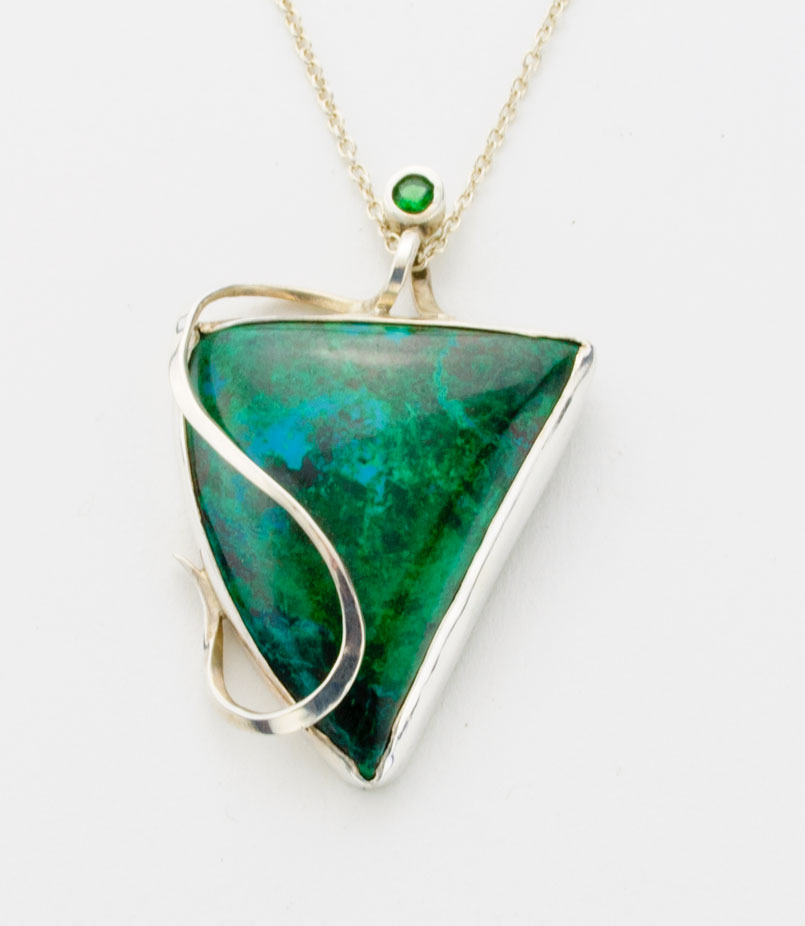
Today’s Rock Review features a “hometown” gem for those of us hailing from Pennsylvania, home state of Layne Designs Studio. It’s Chrysocolla!
Geology Buzz
Chysocolla ranges from blue to green in color, often appearing in lovely sea foam or teal tones. Because of its color, it’s sometimes confused for Turquoise, however it is a different gem altogether. It is a secondary ore of Copper. It forms in oxidation zones in veins of Copper ores over long periods of time as oxygen chemically changes the composition of the ores. In these veins it can form either as a crust or a rounded mass. Often, it forms along side or in conglomeration with other minerals such as Quartz, Limonite, Azurite, Malachite, Turquoise and Cuprite. That is why Chysocolla gemstone will often contain veins and traces of these gems as well.
It registers a 2.5-3.5 on Moh’s scale of hardness and therefore should be handled with care. Pure Chysocolla is too soft for the everyday wear and tear that occurs in jewelry, however when it forms in the presence of quartz, it becomes hard enough to fashion into a beautiful cabochon. It can also occur in druzy form, yielding am amazing natural Robin’s egg blue color.
Fun Facts
The name for Chrysocolla comes from the Greek words “Chysos”, meaning gold, and “Kolla” meaning glue. This is because they used the ore to solder gold. A metal smith named Theophrastus is the first person to be credited with using the material in 315 BC.
Not only does Chysocolla come from Pennsylvania, it also can be found in Israel, the republic of Congo, Chile, England, France, Arizona, Utah and New Mexico
As its color alludes, gemstone healers believe Chysocolla to have calming and cooling effects. It can be used to treat nervous disorders and bring a sense of peace. It also is applied in the treatment of fevers, infections, burns or cramps.

Thursday, July 21, 2011

Rock Review: Crazy Lace Agate

Crazy Lace Agate, a type of Mexican Agate, is named for its stunning haphazard contour line and ripple designs that occur in a wide range of colors from creamy browns to deep blacks , sometimes interspersed with red throughout the stone. Many liken it to having a lacy effect or a paisley look. This beautiful variance is a result of the presence of several minerals in the gem such as Micro-crystalline quartz, banded chalcedony, iron and aluminum. It is opaque and somewhat chalky in its natural form, but does take a high polish that leaves a lacquered looking surface. Jewelers prefer to use this gem in slices or cabochons to highlight its unique natural design that is so uncommon.
Crazy Lace Agate is found only in limestone beds that date back to the Cretaceous period, making it between 90 to 65 million years old! This gem hails from Chihuahua, Mexico, the largest of the 31 states in the country. Although it was first discovered in 1895, the stone did not gain popularity until traveling hobbyist unearthed some particularly good specimens in the mid 1900’s along the side of a newly developed highway. This sparked an agate craze that is notable in the jewelry of the 1950’s and 1960’s. The beloved Crazy Lace Agate is known as the generational stone because it is believed to increase understanding and communication across generations, making it a particularly good gift for a grandparent or grandchild.
This is a very large example displaying the amazing array of colors that can come together in a specimen of crazy lace agate. this piece is seen here as a beautiful pendant


Friday, July 15, 2011

Rock Review: Seraphinite

Today’s gem , Seraphinite or Clinochlore, is a single source gem, coming to us from Baikal Lake in Eastern Siberia! It is name comes from the word Seraph (winged angel) found in the Bible, because of its feathery patterns that show well when the stone is polished. It is a mottled grey to dark green in color due to the presence of Chlorite and has silvery flecks of Mica that show chatoyancy, which is similar to the sheen that comes from silk. It registers between 2 to 4 on Mohs scale of hardness.
This pretty rock is fairly new to the world, since it was reportedly discovered only about one hundred and twenty years ago by Russian mineralogist Nikolay Kolsharov. Other sources debate that it was not actually discovered until 1947. In any case, by geologic standards this is a recent discovery. Western markets did not have frequent access to the gem until the 1970s.
In the metaphysical realm, Seraphinite is believed to strengthen chakras and enhance healing. It also aids in disease recovery by bringing the physical body back into balance. Some healers also think it to be useful in contacting Angels and increasing awareness of the divine. For care and maintenance at home, owners can use the same “rules” that are generally used for care of pearls. Avoid chemicals, solvents, abrasive cleaning tools and heat. Stick to a gentle warm water and soap solution and pat dry with a soft cloth.


A lovely Seraphinite Bracelet by Layne

Thursday, July 7, 2011

Rock Review: Ruby


July’s birthstone is Ruby, making it a perfect time to review this beloved gem! It’s name comes from the Latin word, ruber, meaning red. Rubies, also like Sapphires, come from the mineral Corundum (aluminum oxide), making these two stones “sister” gems. Rubies are often valued according to color, the most sought-after shade being a deep red “pigeon’s blood” color. Minimal inclusions and a glassy luster are also desirable qualities in a high end, natural Ruby.
There are many myths and legends surrounding the Ruby, which greatly accounts for the long term popularity of this lovely gem. For many cultures, it’s stunning red color naturally associates it with love, romance and passion. Hindus believed that the colors of Rubies were due to an inextinguishable fire that burned inside the gem. This fire was thought to grant it’s wearers long life. Native Americans used Rubies for ceremony offerings in hopes to be reborn as a chief. Burmese warriors believed that Rubies would protect from injury and make a soldier unconquerable in battle.
In final tribute to the gem of July, please enjoy the words of Ralph Waldo Emerson in praise of the Ruby! “They brought me Rubies from the mine, and held them to the sun; I said, “They are drops of frozen wine from Eden’s vats that run.” I look’d again – I thought them hearts of friends, to friends unknown; Tides that should warm each neighboring life are lock’d in sparkling stone. But fire to thaw that ruddy snow, to break enchanted ice, and give love’s scarlet tides to flow, when shall that sun arise?”

Thursday, June 30, 2011

Rock Review: Lapis Lazuli

Today’s rock review highlights the brilliantly blue Lapis Lazuli. Sometimes abbreviated to just Lapis (the word for stone in Latin), this semiprecious gem is known for its vibrant cobalt color that can contain marbling of yellow and cream tones as well as tiny flecks of gold. This rich spectrum comes from a combination of sodalite (blue), calcite (white) and pyrite (gold). It has a chalky luster, but still is able to take a high polish that enhances it’s lovely composition and makes it a prime choice for jewelry featuring a cabochon.
Lapis Lazuli was a very popular gem amongst ancient civilizations like the Egyptians, Mesopotamians, Greeks and Romans. The gem can be found in jewelry, large scale tile mosaics and in church art. One of the most famous examples of Lapis Lazuli used in church art is the at the tabernacle designed by Gian Lorenzo Bernini for the famous St. Peter’s Basilica in Rome. The edifice of the gilded bronze structure is encrusted with Lapis, the perfect contrast for the gold surface of the architecture. Cleopatra was even reported to use the powdered form of the stone for eyeshadow. While we don’t use Lapis as a cosmetic these days, it still is sometimes used in its ground form to give pigmentation to tempera and oil paints.
Most modern people prefer to enjoy their Lapis Lazuli in the form of jewelry. It is thought to grant its wearers insight, wisdom and enhanced intellect. The gem is very easily maintained at home and can be cleaned with a warm water and soap solution and a soft toothbrush when necessary. Below is a great example of Lapis Lazuli by Layne Designs. Contact Layne for information regarding availability.


Friday, June 24, 2011

Rock Review: Dendritic Opal

In today’s rock review will take a look at an “international gem of mystery”, the Dendritic Opal. It is found across the globe, and colors range in many neutral tones, from tans to grays often mottled with white. Part of what makes Dendritic Opal so beautiful is its dark branching formations called dendrites. They appear to be similar to moss or roots giving it a unique look that many people think is reminiscent of a fossil! However, the dendrite branches actually come from the mineral Manganese rather than fossilized plant life.
Luckily for Opal lovers, it is easy to maintain the gem at home since it can be cleaned with a simple dish soap and warm water solution then thoroughly dried with a soft cloth. Many people have long enjoyed Dendritic Opal for its metaphysical properties of promoting spiritual growth. It also is a popular gem with healers, aiding in treatment of blood, breathing and skin disorders. The famous Carl Faberge (think Feberge Egg) was a fan of Dendritic Opal and used it in a number of his pieces, some of which were supplied to the Russian imperial court. Many gem lovers in the 21st century are still enjoying Dendritic Opal for its unique marriage of rocky and organic looks.
Some confusion surrounds the stone’s identity and make up due to some aliases sometimes given to doppelgangers of this gem. For instance Dendritic Opal is often referred to as Merlinite which is actually a Chalcedony. Merlinite was dubbed an “Opal” because of its opalescence, but is not in fact an Opal. Agates with dendritic features are also sometimes labeled Dendritic Opal, but also are not authentic Opals. A true Dendritic Opal IS a common Opal, meaning it has no play of color, that also has the presence of dendrite formations.
Check out this lovely piece from Layne Designs in Dendritic Opal!


Dendritic Opal Ring from Layne Designs


Thursday, June 16, 2011

Rock Review: Smokey Quartz

Today’s gem, Smokey Quartz, gained a some popularity over the past year as it has been used to compliment the many grays and neutral tones we are finding in our closets these days. Smokey Quartz, as all Quartz, is a silicon dioxide crystal that forms over time as oxygen and silica based solutions that are present in the earth combine together. The dark gray/brown tones in Smokey Quartz are a result of “free silicon” by product of the chemical reaction that then colors the stone through irradiation.
Quartz is the second most prevalent mineral (Feldspar is first) in the world and is found in many sedimentary, igneous and metamorphic rocks. It can be found in widely known stones such as Granite, Rhyolite, Obsidian, and Sandstone. Some special varieties of Smokey Quartz are Morion and Cairngorm. Morion is the name for a color of Smokey Quartz that has a rich, even, glassy black appearance. Cairngorm is found in the Cairngorm mountains of Scotland and has a smokey yellow/brown or gray/brown color and is a popular trademark of traditional Scottish jewelry.
Many people prize quartz as mystical stone that possesses healing powers. Smokey Quartz in particular is believed to be useful in healing ailments of the abdomen, kidneys, pancreas, hips and legs. It also is useful for pain relief, particularly for headaches, muscle aches and nerve pain. Many varieties of quartz are also used to bring clarity to dreams, secure a peaceful sleep and instill a sense of well being.
Check out a recently made Cocktail ring from Layne Designs in Smokey Quartz. Contact Layne for more details on this beauty or a few of it's "friends" in other quartz varieties!

Thursday, June 9, 2011

Rock Review: Red Coral


The lovely warm weather has everyone thinking about the beach. So it’s the perfect time to review Red Coral which is one of the loveliest and most treasured gems from our oceans. Coral is a biogenic gem, meaning it’s developed through a biological process. Some other familiar biogenic gemstones are Pearls, Amber and Ivory. Red Coral is a unique living creature, part polyp and part skeleton, that grows slowly over many years as a result of calcium carbonate deposited by marine invertebrates after they die. Carotenoid pigments account for its beautiful red to pink color.
Coral has been used as jewelry and decoration for many centuries not only for its vibrant color but also because of cultural beliefs in its magical and medicinal qualities. Greek, Roman, Native American and even a few ancient barbarian tribes, such as the Gauls used the gem for protection, healing and ceremonial rituals. The Romans used it on pendants worn by children as talisman to ward off sickness and other dangers. Coral can often still be seen in Native American and southwest jewelry design, often paired with Turquoise, ever since the Spanish introduced the material to native peoples in the eighteenth century through trade.
The ethical use of Coral has been a hot topic in recent years. Because of its “slow grow” process, harvesting Coral from the oceans in unregulated quantities has become unsustainable because the Coral cannot grow quickly enough to meet human demand for it. This leaves jewelers and jewelry lovers with a dilemma. Is it ok to use and wear Coral? How can this be done in an ethical way? Layne Designs believes that it is important to be good stewards of our natural resources and only uses ethically traded materials in all of our work. In the case of coral, this means that we use vintage coral harvested prior to 1970 in our jewelry. Reusing existing resources through repurposing is a clever and creative way to enjoy the beauty of Coral without endangering its future. Check out one of Layne’s showpiece necklaces in Red Coral below.

Fabulous Red Coral Necklace by Layne Designs! Price Upon Request

Thursday, May 26, 2011

Rock Review: Turquoise

Sleeping Beauty Turquoise with Coral earrings on Etsy
Today’s featured gem, Turquoise, is one of the historically oldest mined gems in the world. It has been worn by many cultures over thousands of years in places like Turkey, Persia, Egypt and Mexico. It owes is name to the French who called it Turquoise since it was first brought to France from Turkey. A few other historical names for the stone can be found including Chalchihuitl in Aztec and Callais in Greek.
Turquoise is a hydrous phosphate of copper and aluminum that occurs over time when weathering, oxidation and percolating acidic solutions cause these minerals to chemically combine. The blue tones in Turquoise are a result of the presence of copper. Green and teal colors appear due either to dehydration or sometimes the presence of iron. One of the unique and beautiful properties of Turquoise is its trademark dark and somewhat shiny veins which are actually deposits of aluminum, pyrite and limonite. Turquoise is esteemed by many not only for it’s lovely robin’s egg blue color, but also for its waxy opaque luster which differs greatly from the abundance of glassy, faceted gems in today’s gem market and brings visual interest to a jewelry collection.
The American South West has long been known to be a major source of Turquoise in the world and the gem has become a staple of South West fashions. Other worldwide sources of the gem are found in the Middle East and in China. Many established Turquoise mines in the U.S. and abroad continue their operations today just as they have in decades past through seasonal, hand worked procedures that use little to no large scale machinery. Since the stone is so greatly loved across cultures and so carefully obtained, it’s likely that jewelry collectors will continue to hold Turquoise in high value for a few more millennia!

New Turquoise from Layne Designs:


Thursday, May 19, 2011

Rock Review: Cherry Creek Jasper

This week in the Rock Review, we’ll examine a stone that looks more like it could be a painting! Cherry Creek Jasper is known for its vibrant natural tones that form together creating a result that often looks like an abstract painting of a natural landscape. It has a wide range of color variation in the stone ranging from mustard to an apple red that even sometimes contains hints of an aqua tone or forest green. It’s trademark feature is lines of brown and dark gray that appear throughout this variegation of colors, taking on the appearance of trees or twigs.

Currently, this stone hails from China and is available in the U.S. in limited quantity. Cherry Creek Jasper is also known by a few other names such as Red Creek Stone and Red River Jasper. In realty, there is some debate regarding the stone’s qualification as a true Jasper because it differs on Moh’s scale of hardness from traditional Jasper. Cherry Creek Jasper scores a 6, while traditional Jaspers scores 7. It’s more likely that Cherry Creek Jasper is a type of silicified calcium-based stone such as dolomite. As Shakespeare commented “a rose by any other name would smell as sweet”, and this is exactly our opinion of Cherry Creek Jasper. It’s striking colors and unique patterns make it a delight for jewelers to work with and a joy for customers to own.
Check out some Cherry Creek Jasper currently available in our shop below!


Monday, May 9, 2011

Trend Watch: Druzy, Druzy Everywhere

By: Erica Delp

In today’s segment, we’ll examine Druzy! It seems like it’s been popping up everywhere lately. And why not? It’s a great way to add some shimmer to your summer outfits, whether you are stepping out in the day or night time. Since it often has an asymmetrical shape and of course a raw crystal surface it easily lends itself to bohemian and airy looks that define a summer wardrobe for most women. What a perfect way to bring some uniqueness and personality to your favorite outfits.

But what is a Druzy? Are all Druzy’s created equal? How can you make sure that you’re purchasing a quality piece of jewelry that will last? A deposit of Druzy crystals can occur on a great variety of already developed gemstones as geologic activity forces rocks to the earth’s surface where they can come into contact with other minerals and water. This mineral laden water flowing over the surface of the gemstones leaves beautiful unique deposits of crystals over time that can be extracted and fashioned into beautiful jewelry. Since Druzy is a crystal deposit that can occur on a wide variety of stones, it therefore can greatly differ in value depending on the worth of the base gemstone and the quality of the crystals. Druzy is commonly found in Quartz and Agate. It also can be found in Garnet, Hematite and Pyrite just to name a few others. Although Druzy crystals are hard, it is important to remember also that they are vulnerable to abrasion. Therefore, when selecting a piece of jewelry, a pendant or set of earrings will tend to have greater longevity than bracelets and rings. Unless of course, the later pieces have additional sheltering through their setting or will be worn delicately or infrequently.

Knowing these simple guidelines will help you to choose a piece of jewelry that will be so much more than a summer fling as you fall in love with it again and again each time you wear it! Check out some great Druzy creations for purchase from Layne Designs below.