Thursday, April 19, 2012

Diamonds Part 3: Clarity

As I gear up for a trip to a diamond grading lab class at the Gemological Institute of America, it seems like the perfect time to be doing a marathon rock review on diamonds. What makes these tiny rocks worth thousands, even millions of dollars to us? Is it all part of an incredible marketing plan by giant corporations with diamond interests? Perhaps there really is something to it.

The diamond is a gem fascinating from all perspectives. To begin with, a diamond is composed entirely from carbon, the building block of life. It is the only gem whose chemical makeup is so pure. That is precisely why the clarity of a given gem has a monumental effect on the value of that gem. Clarity characteristics represent something that got stuck in the crystal as it was being formed. Some clarity characteristics are tiny crystals of other types of gem, some are graphite, and yet others are simply cracks in the crystal structure. Regardless, they take away from the notion that this gem is one of the rare examples of pure, perfect carbon atoms connecting in elegant succession to create the most durable substance known to man.

The truth is, that most of the diamond mined do not represent diamonds in such a romantic way. After a mine has started operations after billions of dollars in investment, tons and tons of diamonds are mined which are so heavily included that they would not even resemble what you think of as a diamond. Less than 20% of diamonds mined worldwide each year approach gem-quality. Low grade rough is used industrially.

In case you are reading with the intention of diamond shopping, I will include below a chart which expresses the different grades of clarity as they pertain to Gem-quality diamonds.


If you are diamond shopping, be aware that flawless and internally flawless diamonds are so very rare, that they are unattainable for most of us. This chart is showing an a large, elementary scale what the clarity grades mean, but remember that 10 times magnification is a lot, and even under this magnification, many characteristics are only visible by a person trained to know what to look for. I encourage you to shop for diamonds that are graded with a certification from the Gemological Institute of America. That certification gives you proof of what it is that you are purchasing. That assurance is difficult to get in any other way. If you need a diamond buying coach, maybe I can help. feel free to email me-- info@laynedesigns.com

Thursday, April 12, 2012

Diamonds Part 2: Color


Of the four "C"s it is color which is most obvious to the consumer. For this reason it is perhaps the most well known of the four "C"s. Diamonds come in an amazing variety of colors including blue, green, red, orange, yellow and more.

Diamond most commonly occur in shades of yellow to white (colorless) and brown. All shades from completely colorless to slightly yellow or brown fall into a standard called the "normal color range" by the Gemological Institiute of America. Deep tones of these colors, or any color other than yellow or brown are considered "fancy" colors.

Diamonds in the normal color range are categorized in an alphabetical scale ranging from D to Z, D being the highest color grade that a stone can have. When this scale was created, it was meant to be used only within the industry for gem dealers to communicate with each other. The reason that the scale begins with "D" is because GIA felt that the negative connotation of the letter "D" as it is used in the school system would discourage jewelers from using this scale with their customers! It was not in effort to hide anything from customers, but rather that consumers would have no desire to learn charts and scales of information just to buy a diamond.

Regardless, after the scale was unveiled, jewelers and customers alike were using the scale to better understand the value of their gems. Before the implementation of this scale, terms like "light yellow, fancy white, and blue white" were used to describe diamond colors. For obvious reasons the vagueness of these terms created conflict about how a gem was represented versus the real color of the gem.

For most shoppers, the GIA scale can be simplified for easier commnication. D,E, and F color stones are all in the range considered "colorless." G,H,I and J rated diamonds are considered "nearly colorless" and K, L, M, and N stones are dubbed "faint yellow" See the chart above.


Sunday, April 8, 2012

Diamonds, Part 1: Carat

Those interested in diamonds are commonly introduces to "the four C's" carat weight, cut, clarity and color. Because of the abundance of information and research available on this stone, I'll be covering each of the four c's in in a separate rock review article for the month of April-- the birthstone for which is diamond.
The most revered of gemstones is so beloved not merely because of its extraordinary beauty, but because its fascinating crystal formation makes it the hardest substance known to man. From the very first diamond crystal discovered, it was clear humans that this rock was different from all others. This special stone was set into jewelry as early as the Egyptian and Roman empires, before the technology existed to cut diamonds into any shape other than it's natural octahedral shape.
It was around the same time that trade between societies increased, creating a need for certain universal measurements. The word "carat" is derived from "carob." The carob seed was plentiful in the Mediterranean region, the center of trade at the time. These seeds were relatively uniform in size and weight, and became a standard counterweight for weighing small objects on a balance. This measurement evolved into what we know now as a carat which is equivalent to one fifth of one gram.
This tiny measurement, one fifth of one gram, is the basis for weighing nearly all gemstones, and in the case of diamonds, one tenth of a carat can mean the difference between hundreds or thousands of dollars for each stone in the modern market. While a diamond mine may produce many tons of diamond rough in one year, a very very small percentage of that rough is of gemstone quality.
Most diamonds look more like dirty brown rocks than the lustrous gemstone that we picture when we think of them. Of those diamonds that are considered cuttable gems, most are little tiny, itty bitty gems. It is for this reason, that the price of a gem diamond increases exponentially by weight. Additionally, the cost of dimaonds takes a jump at certain markers. For example, many folks shopping for an engagement ring want to purchase a stone of a certain size. A gemstone just over one carat is worth more per carat than a gemstone just under one carat, the same is true of two carats or even half carat markers.

Monday, March 12, 2012

Rock Review: Fire Agate


Today’s rock review features Fire Agate.
Geology Buzz
Fire Agate is a very special type of Agate that is mostly brown, but contains a special iridescence in the spectrum of the rainbow. This effect is accomplished when layers of plate like crystals composed of iron oxide adhere together in differing planes. Light reflects back and forth on these various layers creating this rainbow effect through a process called interference, much like oil in water.
Since Fire Agate is a form of quartz, it registers a 7 on Moh’s scale of hardness, making it ideal for all types of jewelry, including rings and bracelets. Cutting Fire Agate is a challenging task for gem cutters, requiring a careful balance between removing enough layers ensure the stone is not dull to while leaving enough to enhance its iridescence. Often, the natural formation of the stone must dictate its final size and shape. This is why Fire Agate is rarely mass produced and most often found in specialty pieces.
Fun Facts
Fire Agate has been used in jewelry markets for only about 60 years. When it first entered the jewelry market, dealers had a hard time settling on a name for the gem. It was known as “opalescent agate”, “cinnamon opal” and “precious peacock stone”. However, it is important to note that it is not a true Opal and comes from the Quartz and Chalcedony family.
Gem quality Fire Agate is found almost exclusively in the American South West and also occasionally in Mexico, specifically in regions surrounding the Sonoran Desert and the Sierra Madre Mountains. This is likely due to volcanic activity that occurred more than 24 million years ago in the tertiary geologic period. Although no one knows for sure, Warren Jones claims to be the one to officially discover Fire Agate in 1941.
Fire Agate is thought to be a powerful stone of protection believed to relive fear, stop gossip, and deflect harmful intentions. It also can be helpful in promoting healthy lymph, circulatory and intestinal systems. It also can be useful in balancing energy.

Monday, March 5, 2012

Trend Watch: Paisley

By: Erica Delp

Spring is just around the corner this month, promising to banish our winter blues and muted tones in favor of sunshine and vibrant color! One trend seen on recent spring fashion runway shows are a wide array of patterns in paisley. It’s true, paisley is no longer only found in your favorite Vera Bradley bag. Designers like Jil Sander, Etro and Stella Mc Cartney also featured the lively pattern in many of their spring 2012 looks.

Paisley is a perfect choice for your spring ensembles because it can usually be found in cheerful spring like color pallets ranging from whimsical pastels to saturated juicy color pairings. The shape and positioning of paisley in a pattern also can be reminiscent of florals, without being a literal interpretation of spring. A well chosen paisley piece for your spring wardrobe will be sure to bring some modern appeal to the rest of your warm weather basics and put you in the mood for fresh air and all things green and growing. A blouse, scarf, or sundress in a light airy fabric are all great choices to experiment with this look in style.

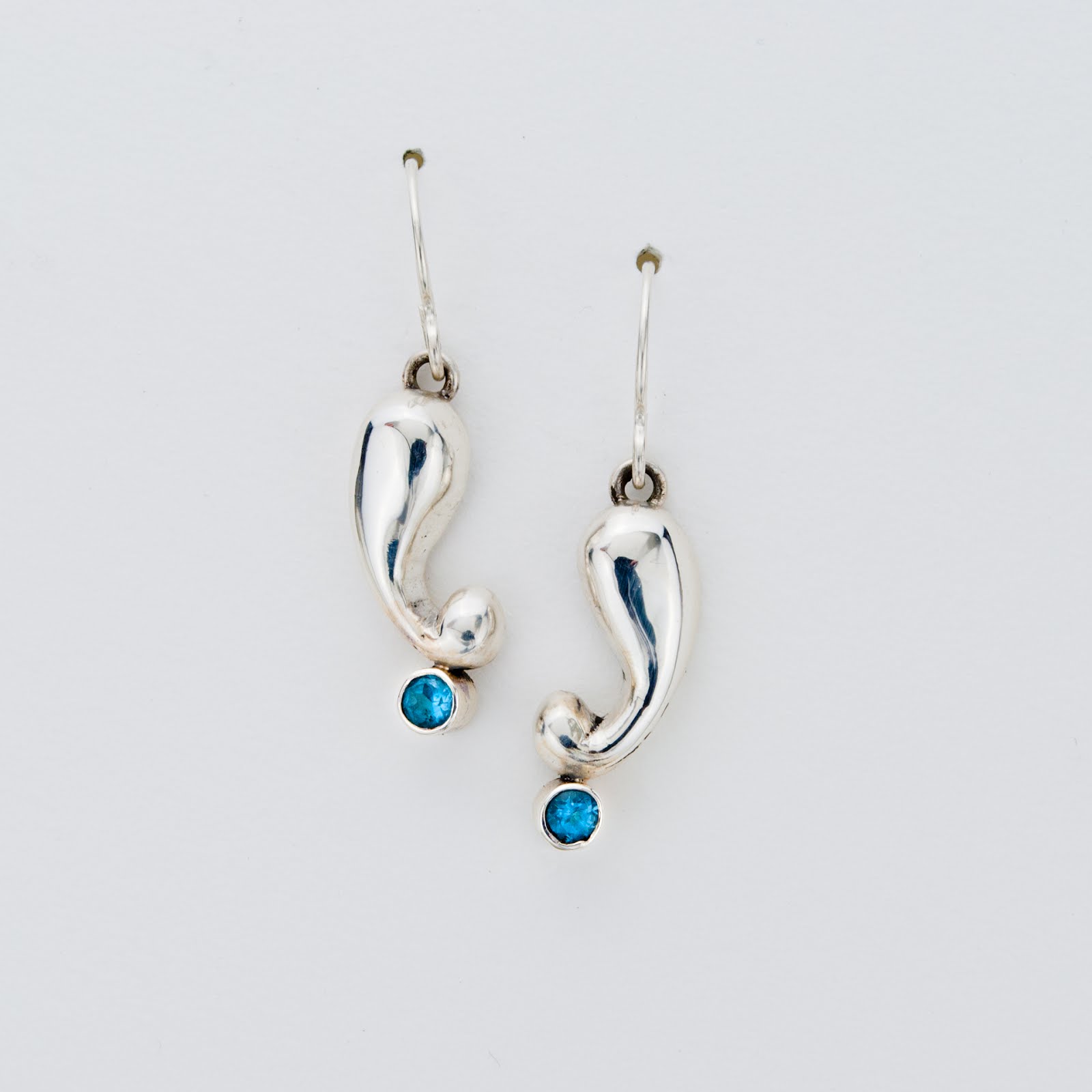
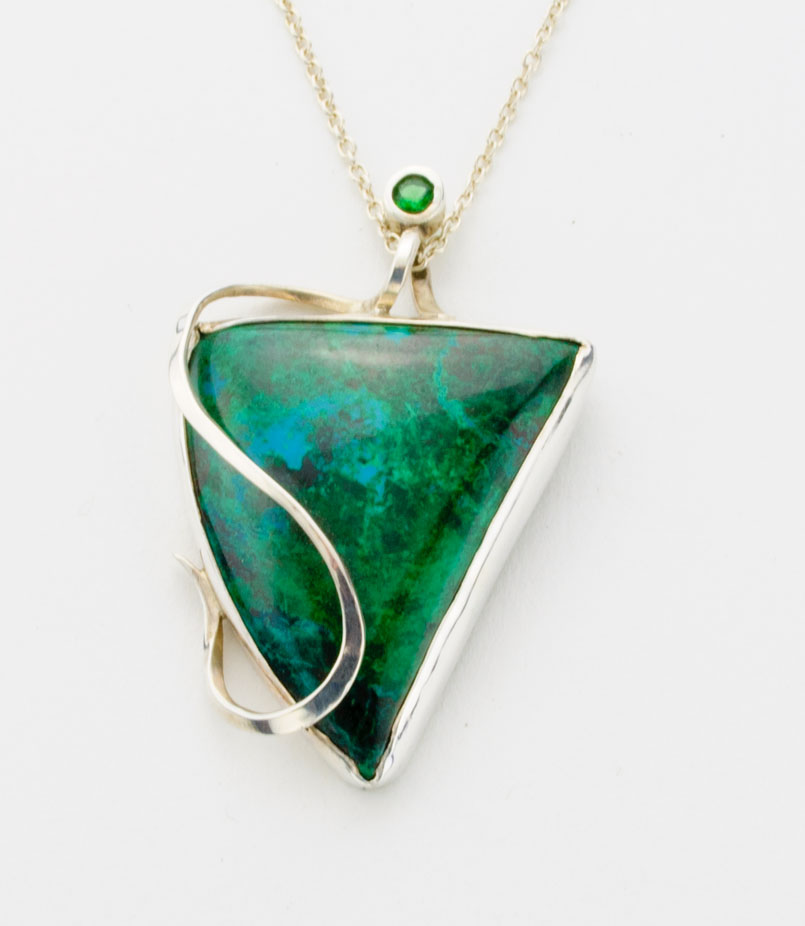
At Layne Designs, we’ve caught the paisley bug too. In fact, we have an emerging line dedicated to this eclectic and fanciful pattern, which happens to be a favorite of ours as well! Check out some of our favorite pieces from the paisley line featured below readily available in colors that are ideal for spring time.


Thursday, March 1, 2012

Rock Review: Diopside


As we enter March, we’ll review Diopside, the perfect companion for all the soon to emerge spring greens.
Geology Buzz
Diopside is a pyroxene mineral that is found in igneous and metamorphic rock deposits. It contains the elements Magnesium, Silicon, Oxygen and Calcium. It often is found in conjunction with Basalt, Olivine, Dolomite, Limestone, Marble and Andesite.
Gemstone quality versions of the mineral are usually called “Black Star Diopside or Chromium Diopside”. The presence of Chromium is responsible for the rich Kelly Green color (similar to an emerald) that is most often seen in jewelry. “Violane” is also a rare blue to violet color of Diopside that gets its tone from Manganese. White occurrences can fluoresce a bright powder blue color. Diopside registers between 5.6 and 6.5 on Moh’s scale of hardness.
Fun Facts
Discovered circa 1800, Diopside gets its name from the Greek language taking the words “dis” meaning two and “opse” meaning “face” to describe the two different ways it’s prisms can be oriented. Today, it is exported mainly from Russia, specifically from Siberia.
Diopside is a lesser known birthstone for the month of March and is also associated with the zodiac sign Pisces. It is believed to enhance creativity in problem solving, analytical abilities and achieving goals. It is also linked to love, commitment and the inner desires. It also is thought to be useful in healing the heart, lungs and circulatory system.
Diopside is fairly rare, however its price has still thankfully remained affordable. Chrome Diopside is usually available in smaller carat sizes since the gem usually appears darker as its size increases. Samples over 2 carats in size are much more rare and usually command a higher purchase price.

Friday, February 24, 2012

Rock Review: Sodalite

Today’s rock review features Sodalite.

Geology Buzz

Sodalite is a mottled gemstone that most often has creamy yellow to white tones and royal blue colors mixed throughout the stone in interesting patterns. However, it can also occur in grey, yellow, pink and green if its chemical composition varies. It is named for the element Sodium than can be found in its makeup and belongs to the Feldspar family. It registers at 6 on Moh’s scale of hardness.


Sodalite is usually opaque, although translucent crystals can be found in larger deposits. It takes on a waxy luster when polished. Because of this, Sodalite is often found in beaded and cabochon form in jewelry. Sodalite can often be mistaken for Lapis Lazuli, however it almost never contains pyrite flecks present in Lapis. Also, it’s color is considered “Royal Blue” rather than “Ultramarine”. In streak tests, it will leave a white, rather than blue scrape.


Fun Facts


People began using Sodalite as ornamental decoration in the late 1800’s after a substantial quantity was found in Ontario, Canada in 1891. Bancroft, Ontario is known to produce Sodalite of with notably rich blue color. The mineral also can be found plentifully in Brazil and in China.

Sodalite is popular among individuals who enjoy the metaphysical properties of gems. It is thought to bring calmness and clarity to the mind, encouraging rational thinking, intuition and verbal expression. It also enhances confidence, self esteem and trust.


For care and maintenance, a soft polishing cloth will usually do the trick. A conservative dab of olive oil can also occasionally be used to enhance the luster and loosen dirt. This can be followed up with a quick rinse in warm water. Be sure to pat dry afterward. Because of its porous nature , Sodalite should not be soaked for long periods of time.